

Ending IEP Burnout: A Predictable Model for Special Education Support
When you’re navigating the world of Special Education, it often feels like you’re being handed a thousand-piece puzzle without the picture on the box. You know your child deserves the world, but the "school language," the endless paperwork, and the high-stakes meetings can leave even the most dedicated parent feeling burnt out and unheard.
As a licensed educational psychologist, I created Prepared Parent Advocate to change that. I believe advocacy shouldn’t be a mystery or an endless cycle of hourly bills. It should be a clear, empowering process that builds your skills for a lifetime.
To make this possible, I’ve streamlined my services into a 3-Step Package Process for non-attorney parent advocacy support (professional consultation and parent training). Here is why I work this way and why it’s designed with your family’s long-term success in mind.
Clarity Over Confusion
The first reason for this model is simple: I want you to know exactly what you are getting. In the world of advocacy, "hourly rates" can feel like a trap. You don’t know how many hours a file review will take or how long a consultation will last. By grouping my services into three distinct packages (15-minutes Free Consultation; the IEP Strategy Consultation; and the Meeting Strategy & Support Package) we eliminate the guesswork.
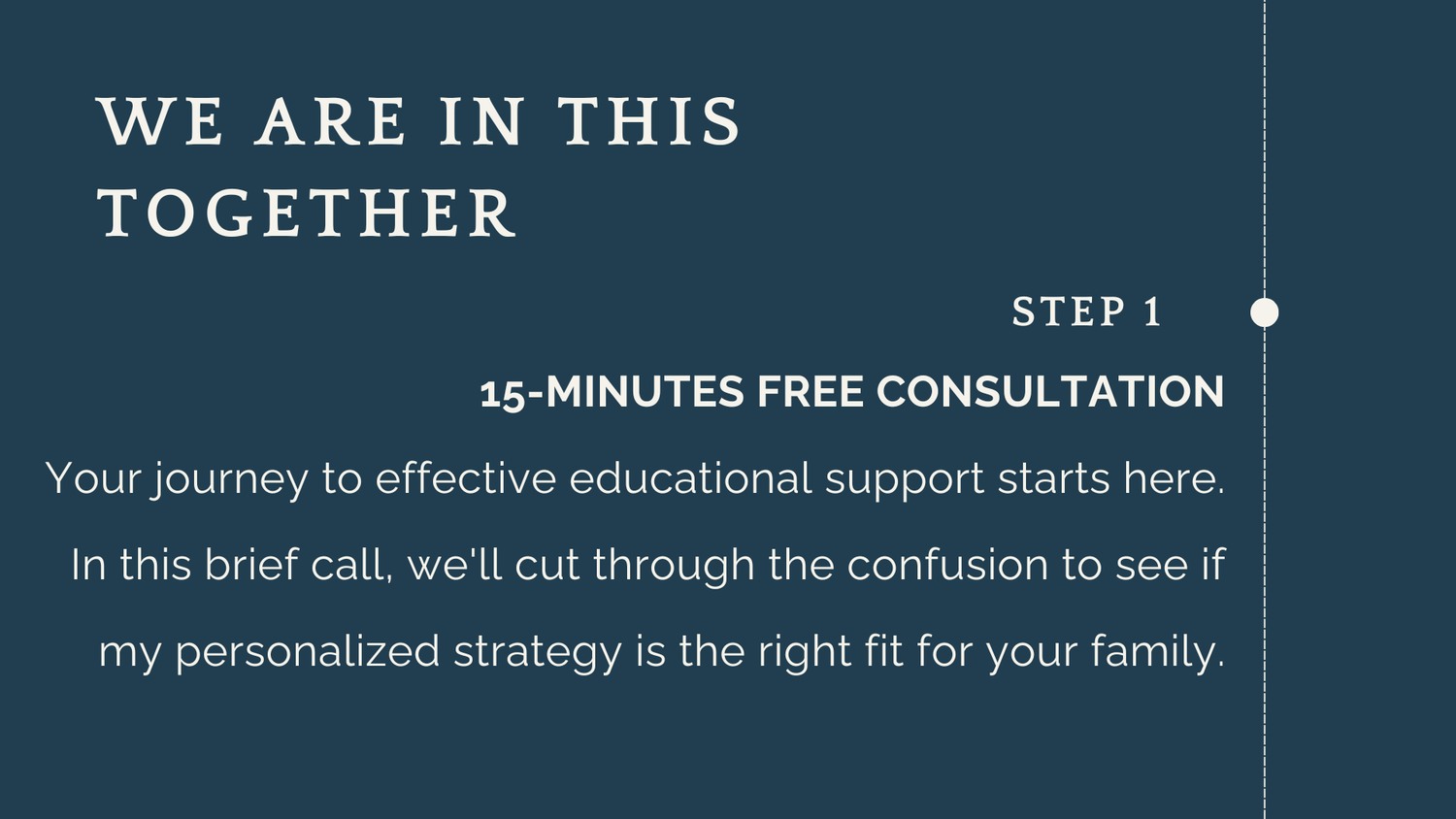
Step 1: The Connection (Free 15-Minute Consultation & Intake)
The first step is always the easiest. Advocacy can feel overwhelming, so I start with a Free 15-Minute Consultation. This is our chance to see if we are a good fit.
The Intake Form: Before we meet, you'll fill out an intake form. This isn't just paperwork; it’s the first step in organizing your thoughts and the data.
The Goal: To ensure you feel heard immediately and to determine exactly which level of support will move the needle for your child.
Step 2: The IEP Strategy Consultation (Your Roadmap)
Once we decide to work together, we dive into the strategy. I believe in Clarity Over Confusion. In this step, we look at the data, identify the gaps, and translate "school-speak" into an actionable plan.
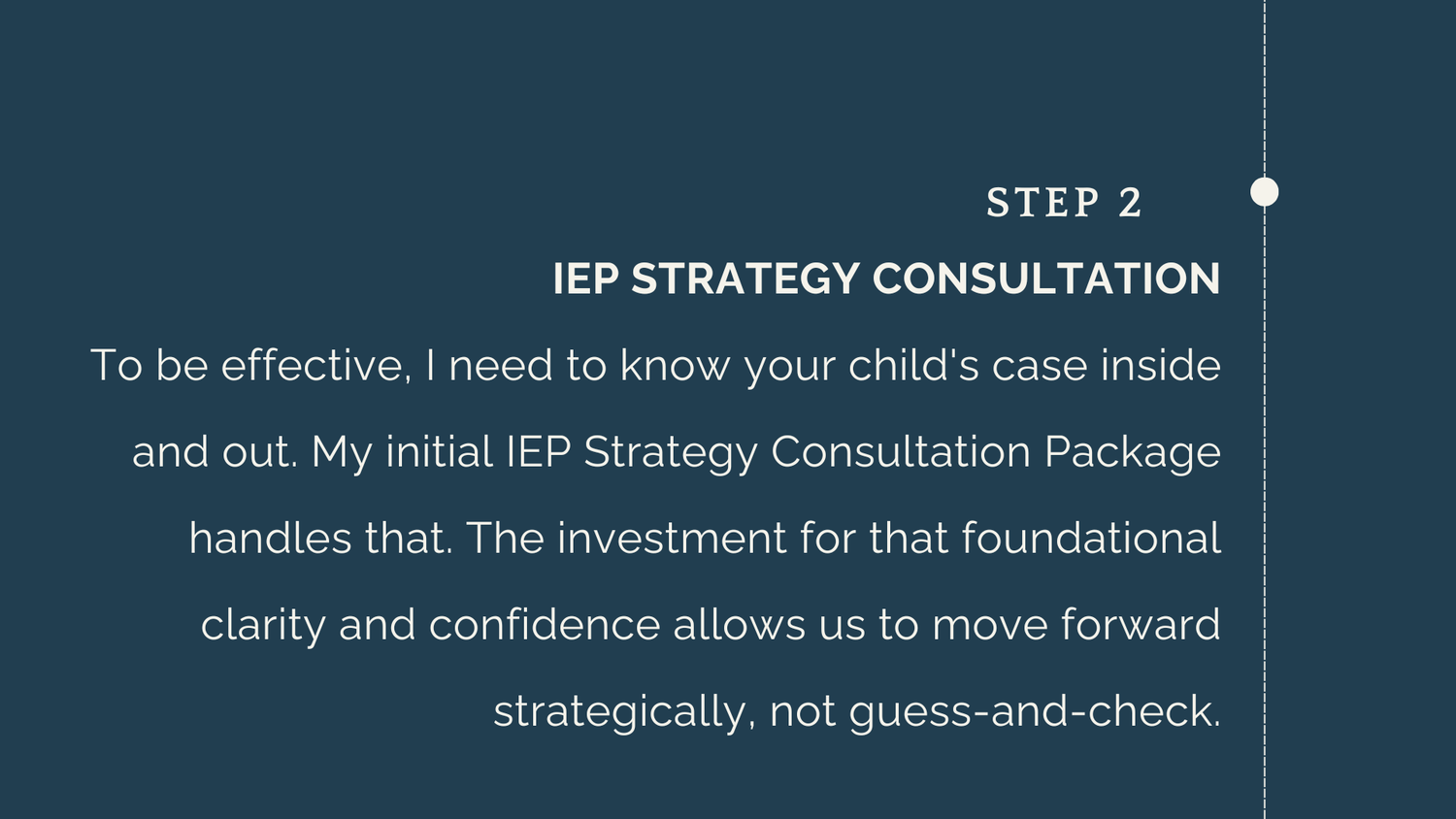
Rationale: By grouping these services into a package, we eliminate the guesswork of "hourly rates." You know exactly what you are getting: a professional "second set of eyes" and a strategic roadmap so you can meet the school team with confidence.
Step 3: Meeting Strategy & Support (Modeling & Implementation)
If you choose to have me join you at the table, this is where the real skill-building happens. My attendance at your IEP meeting is about much more than just "being there." I am there for:
Modeling Communication: I show you how to ask the "hard" questions in a way that keeps the team collaborative.
Co-Regulation: IEP meetings are emotional. Having a partner there helps keep the "temperature" of the room regulated, allowing for clearer thinking.
Direct Feedback: After the meeting, we debrief. We look at what worked and what didn’t, turning every meeting into a masterclass in advocacy for you.

The Big Picture: Control and Burnout Prevention
I came up with this model for three specific reasons:
1. Transparency: You know exactly what you are getting from day one.
2. Control: You decide how much support you need. You are in the driver’s seat.
3. Meeting You Where You Are: This process ensures your child gets the support they need when they need it, without you feeling forced into a long-term contract you might not want.
The Self-Determination Connection
Finally, this structured approach is rooted in the same philosophy as the Self-Determination Program (SDP). If your child is a Regional Center client, you know that the goal of SDP is to give families more "voice, choice, and control."
My package model mirrors this. By having a set price and a set plan, we reduce the decision fatigue that leads to parent burnout. Parents who are constantly stressed about "what comes next" or "how much this will cost" can’t advocate effectively. This process preserves your energy so you can focus on being a parent.
Ready to take the first step?
Advocacy is about moving from "surviving" the IEP process to "thriving" within it.
This 3-step process is designed specifically for you if you’re struggling to:
Make sense of the data: You have the reports, but you aren't sure how they translate into goals or services.
Keep your cool in meetings: You find it hard to stay regulated when the conversation feels dismissive or overwhelming.
Know what to ask for: You feel like something is missing but don't have the "school-speak" to advocate for it effectively.
See a clear path forward: You want to move from being "reactive" to school issues to being a "proactive" partner in your child's education.
If any of these resonate, you don't have to figure it out alone. Let’s start with a conversation.

Monica Trost is the founder of Prepared Parent Advocate. She is an educational consultant, licensed educational psychologist, and mother of children with disabilities. She works with families virtually across California.
Monica Trost, Licensed Educational Psychologist #4660
© 2026 Prepared Parent Advocate