

How to Master the IEP Assessment Plan Before Your Child is Even Evaluated
The 60-Day Clock is Ticking (And Often Wasted)
The moment you sign the Initial Assessment Plan (AP), the school district's 60-day deadline begins. This clock is meant to ensure a timely evaluation, but as a school psychologist, I know this truth: The 60-day clock is a deadline... not a waiting period.
If the initial Assessment Plan is incomplete, those 60 days are often wasted. Why? Because the assessments listed on that document dictate the entire evaluation process. If a critical area of concern is missing, you're setting yourself up for unnecessary delays and rushed testing down the line.
This post will show you how to review and amend the Assessment Plan before signing, giving your child the comprehensive first-shot evaluation they deserve.
The Critical Error of the Incomplete Plan
I've been in countless meetings where, during the parent input discussion after the plan was signed, we learned about significant, unassessed concerns.
For example, a parent might mention significant social communication difficulties (an area that requires a Speech-Language Pathologist (SLP) assessment) which wasn't included on the initial AP.
Adding a specialist after the fact often requires the team to formally extend the 60-day timeline. This means more waiting for you and your child, and it can disrupt the flow of the evaluation. Your child's evaluation should never become a rushed job or a delayed extension.
The power to prevent this delay is entirely in your hands, the parent.
Mastering the Assessment Plan: The Three Domains You Must Check
The Assessment Plan must request assessments in every domain that may be related to your child's suspected disability. Before you sign, review the AP against these three crucial areas:
1. Academic Needs and Cognitive Assessment
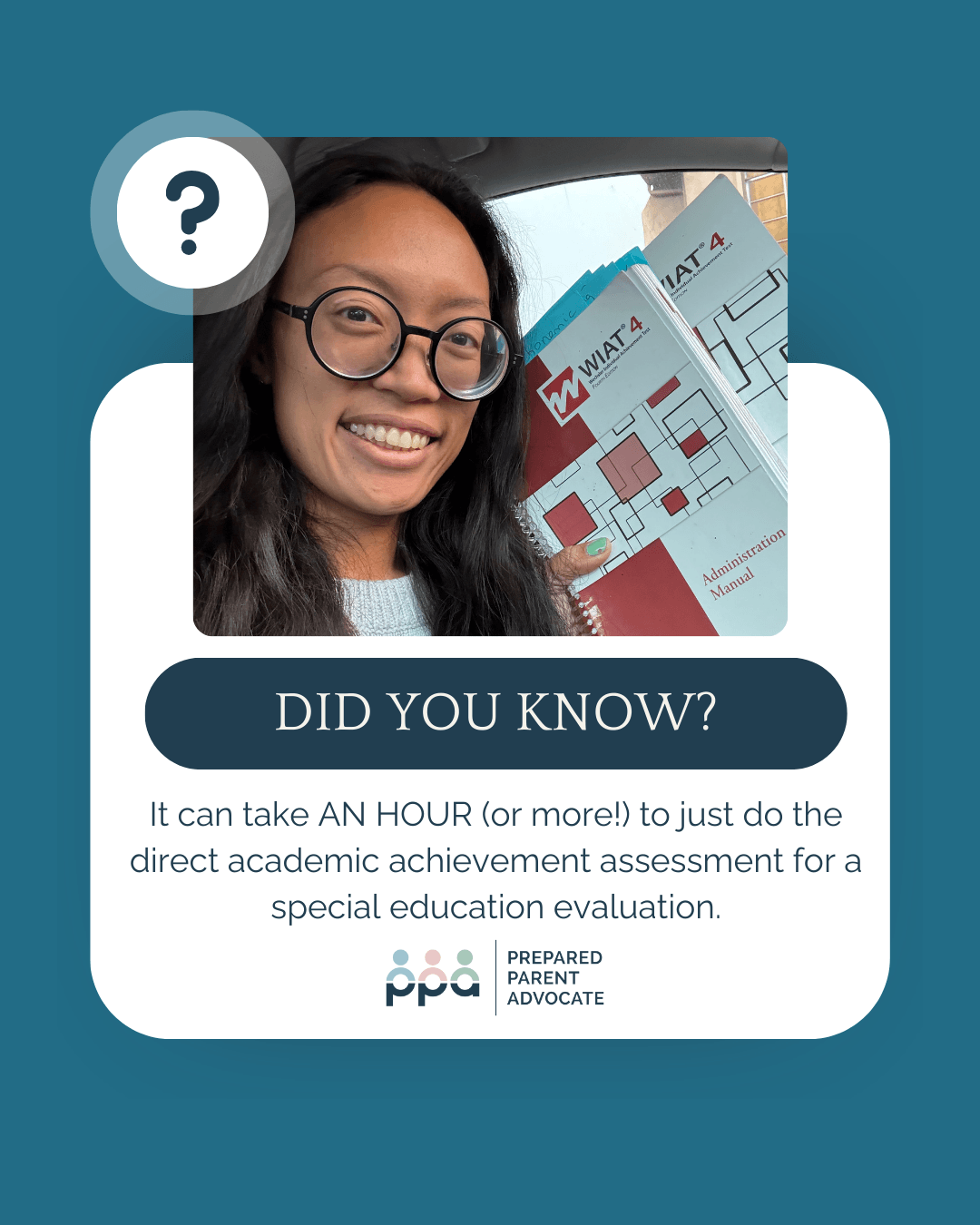
Are the correct academic assessments included (e.g., specific tests for reading fluency, comprehension, or math calculation)? Does the plan cover all areas where your child struggles? Are the cognitive assessments linked to the academic weaknesses?
2. Related Services & Specialized Areas
This is the most common miss. Does the plan include assessments for areas like:
Social-Emotional Functioning
Motor Skills (Occupational or Physical Therapy)
Speech and Language (SLP)
Behavior/Executive Functioning
Adaptive Skills
Sensory Processing
Autism
Assessment areas are based on suspected disabilities. For example, if you're concerned about autism the following areas are typically checked on an assessment plan for a robust and through evaluation: sensory processing, speech, cognitive, academics, fine motor, social-emotional-behaviors, and adaptive.
3. Observations and Parent/Teacher Input
While not on the formal assessment list, there is a spot on the assessment plan that outlines what else would be collected and integrated for a comprehensive evaluation. This includes observations in the school environment and in-depth interview from you (the parents) and all current teachers.
Important Note: if the plan is missing an assessment for a suspected need (e.g., if your child is showing attention difficulties, but no social-emotional-behaviors assessment is checked off to be assessed), do not sign it.
Your Power to Amend and Request
The Assessment Plan is a proposal, not a mandate. You have the right to request changes to this document.
How to respond: Draw a line through any assessment you disagree with and politely but firmly write in any missing assessments you believe are critical (e.g., "add: social-pragmatic communication by SLP").
Keep Communication Clear: Inform the school team in writing that you are returning the modified AP and why you requested the additions.
By taking this proactive step, you force the school team to acknowledge and address all needs before the 60-day clock truly begins on a valid, comprehensive plan.
Maximize Your First Shot: Book Your 1:1 Assessment Plan Review Session
Ready to stop guessing and start ensuring your child’s evaluation is comprehensive from day one?
Getting the Assessment Plan right the first time is essential. If you are facing an upcoming AP meeting, don't leave this critical first step to chance.
Take the next step now:
Fill out the Intake Form so I can learn the specifics of your child's needs.
Book your free 15-minute consultation to see exactly how my 1:1 advocacy services can support you in auditing the Assessment Plan (AP) and preparing your requests.
Receive the support you need from a licensed educational psychologist.

Monica Trost is the founder of Prepared Parent Advocate. She is an educational consultant, licensed educational psychologist, and mother of children with disabilities. She works with families virtually across California.
Monica Trost, Licensed Educational Psychologist #4660
© 2026 Prepared Parent Advocate